Over the past two years, questions about gluten-free and plant-based desserts have roughly tripled here. Mostly it is not a trend — we get calls from people with coeliac disease, lactose intolerance, or parents of children with an egg allergy. So we treat it as a technical problem, not a marketing category.
Gluten-free is not simply leaving out the flour
Gluten builds a network in dough that traps gas and gives the sponge its structure. Take it out and you have to replace that structure. Swapping “wheat flour” for “gluten-free blend” in a recipe does not work — you get something that collapses at the first touch of a fork.
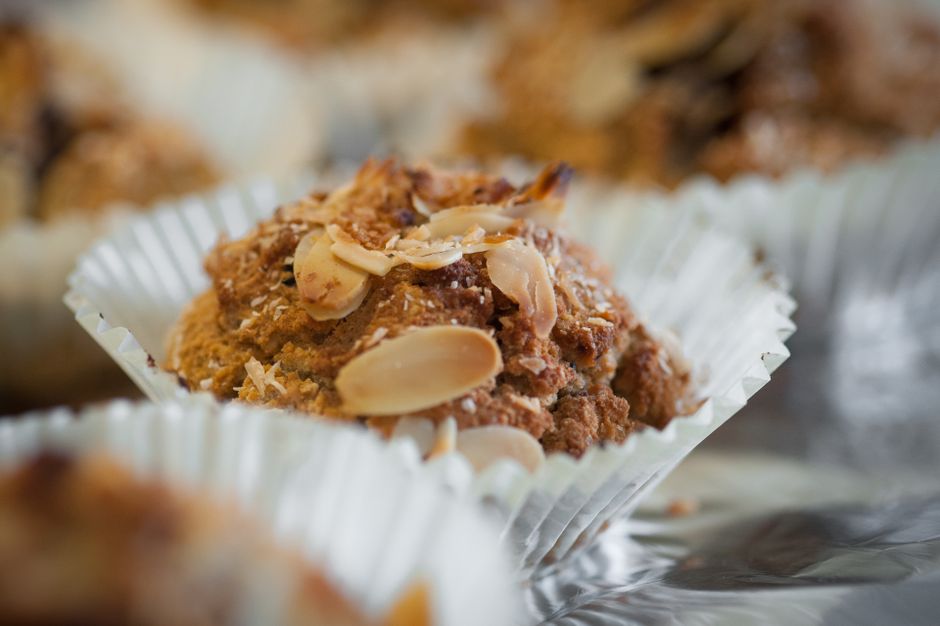
- Almond flour is our most common base. A sponge of ground almonds, eggs and sugar is naturally gluten-free, moist and stable. We bake almond sponges at 165 °C, ten degrees lower than usual — they brown faster.
- Rice and corn flour need a binder. We add 1 % xanthan gum by flour weight, otherwise the result is sandy.
- Moisture. Gluten-free batters dry out faster. We compensate with 10 to 15 % more fat or liquid, and by letting the dessert rest overnight — it is markedly better the next day than fresh out of the oven.
We have to be honest: our kitchen is not a certified gluten-free facility. We handle wheat flour every single day. Gluten-free items are made in a separate batch, on cleaned surfaces, with separate equipment — but we cannot guarantee the absence of trace gluten. If your coeliac disease is severe, we will tell you this straight away on the phone.
Vegan: eggs and butter are two different problems
An egg does three jobs at once in pastry: it binds, it aerates, it emulsifies. Each one needs a different replacement.
- Aquafaba — chickpea brine — replaces egg whites surprisingly well. 30 ml equals one white. It takes longer to whip, 8 to 10 minutes, but it holds a meringue and even makes decent vegan kisses.
- Flaxseed (1 tbsp ground + 3 tbsp water, rested 10 minutes) replaces a whole egg in moist batters such as brownies. In a light sponge it fails — it is simply too heavy.
- Butter. This is where we are most cautious. Plant fats melt differently — coconut fat sets at 24 °C, butter at 32 °C. A vegan buttercream therefore tends to be either candle-hard or runny at room temperature. Our best results come from a good plant fat blend combined with cashew cream.
What we do well and what we don’t
Vegan brownies, egg-free carrot cake, cashew cheesecake and chocolate tartlets with a tofu-chocolate filling are things we are genuinely proud of — people who exclude nothing enjoy them too. On the other hand, we do not make a vegan whipped-cream cake with fresh fruit. We tried, and the result was not something we would charge money for.
How to order
Why it costs more
Customers sometimes ask why a gluten-free cake is a quarter more expensive. Almond flour costs roughly five times what wheat flour does, and the cashews for a vegan cream are not a cheap ingredient either. Then add the time — a gluten-free or vegan batch is made separately, on washed surfaces, with its own equipment, which means it cannot simply be slipped in alongside the regular production. It is not a trend surcharge; it is a genuine difference in cost and hours.
Gluten-free and vegan items are not standing in the display case — we bake them to order, at least 48 hours ahead and preferably 3 to 4 days. When you call, tell us whether this is an intolerance, an allergy, or a lifestyle choice. It is not nosiness; it determines how strictly we separate production. Call 0948 128 000 or write to daniela@nakolace.sk.