A fruit dessert is only ever as good as the fruit. No cream and no gelatine will save a strawberry that has travelled for three days and tastes like a cucumber. That is why our display case changes through the year — not as a marketing pose, but out of economics and flavour.
Spring
March is the leanest month. Stored fruit is past it, new fruit is not here yet. So we lean on citrus — lemon tartlets, orange cream, lime slices. Sicilian lemons still have thin skins and a bright acidity in March; our curd takes 180 ml of juice to 4 yolks and 100 g of butter.
May belongs to rhubarb. We cut it into 2 cm pieces, cover it with sugar at a 5:1 ratio, let it release its juice for an hour, then bake it for 12 minutes at 180 °C so it does not collapse into mush. Paired with vanilla custard it is one of the few desserts that men ask for by name.
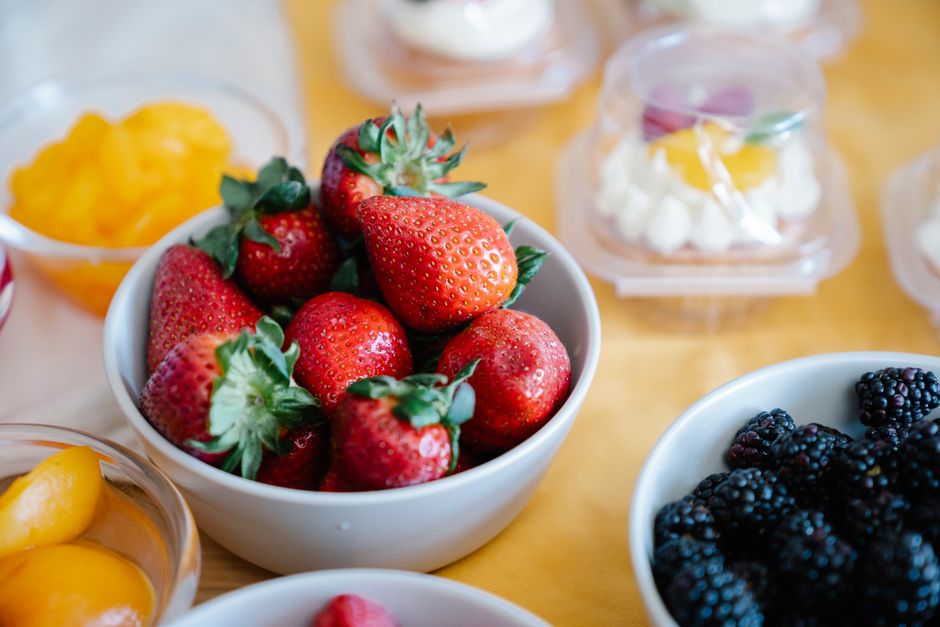
Late May and June bring strawberries. We buy from a grower under the Small Carpathians, not from a wholesaler. You can see the difference in the cut: a local strawberry is red all the way through, an imported one has a white core.
Summer
- June: strawberries and the first redcurrants. A redcurrant cake under meringue is sharp and refreshing.
- July: raspberries, blueberries, apricots. Apricots go into tartlets with almond frangipane — 15 minutes at 175 °C.
- August: peaches, plums, the first pears. Plum and poppy-seed cake is a classic we bake twice a week in August.
In summer we make less buttercream and more quark and yoghurt fillings. Not because they are healthier, but because in a heatwave nobody buys heavy cakes.
Autumn
September and October are our best months. Williams pears, apples, blackberries, pumpkin. We poach whole pears in white wine with cinnamon for 25 minutes at 170 °C and slice them into tartlets. Apples go into strudel — tart varieties work best, Idared or Jonagold. A sweet apple bakes out flat and tastes of nothing.
November is nuts, caramel and almonds. Fruit steps back and honey cake and walnut slices step forward.
Winter, and the frozen fruit question
We will say it plainly: from December to February we use frozen raspberries, blueberries and forest-fruit mixes. Fresh ones are available, but they come from Morocco or Peru, taste of nothing, and cost 4 to 6 € per 125 g. A raspberry frozen at the July harvest has more flavour and more colour.
There are rules. We never thaw frozen fruit in the open air — it goes into the dessert still frozen, or it becomes a reduction or a coulis. A thawed raspberry releases water, dissolves the gelatine around it, and you end up with a puddle.
Winter also means more chocolate, chestnut purée and baked apples in the case. And strudels, of course — apple and poppy seed run all year, the quark one sells best in the cold months.
What this means for your order
What we never buy
Tinned peaches in sweet syrup, bucket fruit fillings, and the so-called fruit gels that share nothing with fruit but the colour. This is not snobbery — you can taste it in the first bite, and the customer simply does not come back. We also skip the glossy fruit spray some kitchens use to fix fruit onto a cake. Instead we brush on a thin layer of neutral gelatine with a squeeze of lemon juice — it holds just as well and lacks that artificial shine that sticks to the roof of your mouth.
Order a forest-fruit cake for June and you get fresh fruit. Order the same cake for February and we will tell you honestly that the fruit will be frozen, and ask whether you would rather have roasted pear with caramel instead. It is not an excuse — it is us wanting you to actually enjoy it. Orders are taken at least 48 hours in advance.