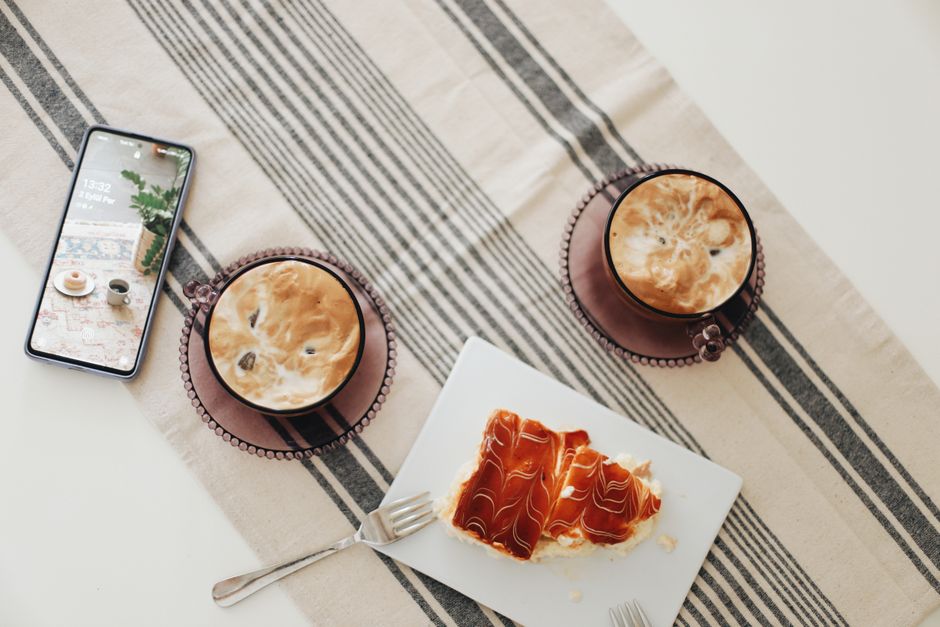
This is probably the topic we argue about most in the shop. Not because the world depends on it, but because a badly matched coffee can ruin an otherwise excellent dessert. And getting it right takes five seconds of thought.
The basic rule: acidity against acidity does not work
Coffee has its own acidity. Light-roasted Ethiopian or Kenyan beans brewed as filter carry a pronounced citrus and berry brightness. Pair them with a lemon tartlet or a raspberry slice and the two acidities fight each other, leaving something sharp and unpleasant behind — rather like orange juice after toothpaste.
The same bright coffee, though, sits beautifully next to anything creamy and sweet, where it acts as a counterweight: cheesecake, vanilla custard slices, panna cotta, walnut bars.
A practical cheat sheet
- Espresso, darker roast (Brazil, India): nut and caramel desserts, honey cake, coffee slices. Espresso bitterness and caramel are siblings.
- Ethiopian filter: white-chocolate cheesecake, quark desserts, vanilla creams. Keep it away from fruit.
- Cappuccino: versatile, but the milk softens everything — a waste next to a serious chocolate dessert. Best with strudel and biscuit-based sweets.
- Flat white: less milk, more coffee — it holds its own against a 70 % chocolate cake.
- Fruit desserts: honestly, tea or cold water beats coffee here. If it must be coffee, go for decaf espresso or cold brew, which is lower in acidity.
Why we don’t serve espresso with honey cake
Honey cake is sweet, spiced, and leaves a long trail of cinnamon and clove. Espresso is short, concentrated and intense. Put them together and each flattens the other. A lungo or an americano works far better — same coffee, more water, lower concentration, longer finish. Exactly what a spiced cake needs.
We see it at the counter: order espresso with honey cake and half the cake tends to stay on the plate. Order an americano and people come back for a second slice.
The temperature nobody thinks about
A dessert straight from the display case is at 5 °C. Coffee is at 65 °C. Cold fat coats your tongue and dulls the coffee that follows. If you have five minutes, let the dessert sit on the plate — buttercreams and chocolate ganaches in particular open up at 16 to 18 °C and taste like a different thing entirely. Whipped-cream and fruit desserts are the opposite: keep them cold.
What we actually do
We do not roast our own beans and we do not pretend to be a specialty coffee bar. We serve coffee that fits what we bake, and if you sit down with us on Námestie Andreja Hlinku we are happy to steer you. We are open daily from 11:00 to 21:00, so there is time for coffee and cake in the evening too.
The home version
If you are taking sweets home and making coffee yourself, three things help more than anything else: grind right before brewing, use water at around 93 °C (not boiling), and let the dessert stand outside the fridge for a few minutes. Those three free adjustments make a bigger difference than buying more expensive beans.
The order on the plate
A small thing that makes a real difference: take your first sip of coffee before the dessert, not after it. Sugar in your mouth suppresses the perception of bitterness and acidity, so coffee drunk after three forkfuls of cake will taste flatter than it actually is. The same logic applies to sugar in the cup — if the dessert is very sweet, drink your coffee black. Most people at our counter who sugar their coffee alongside a slice of honey cake end up leaving half the cup.
And if you cannot decide, just ask us at the counter. We usually know what is in its best form that day — and no article can tell you that in advance.